 PRECISION
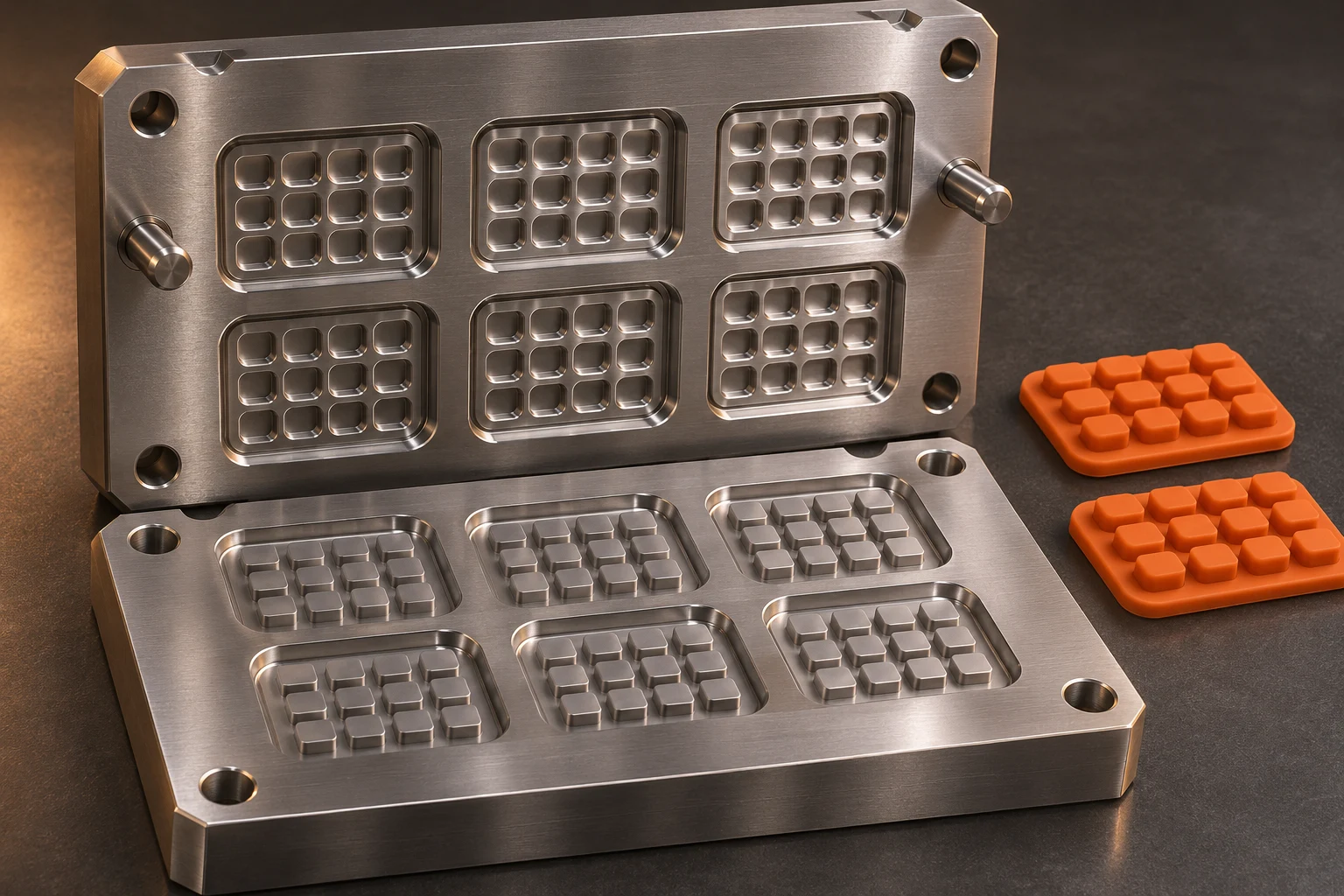
Use a written plan covering the approved drawing, trial material, machine setup, cavity identification, sample checks, correction scope and shipping release. Separate approval of the tool from approval of the finished silicone product.
Write the plan before trial
Acceptance is easier to manage when both teams know what will be checked before the trial begins. Reference the approved drawing, the quotation scope and the selected material. State who reviews the evidence and who authorizes delivery.
A video showing a mold opening is useful context, but it does not replace dimensional or functional checks. Match each requirement to the evidence that can actually support it.
Connect evidence to requirements
| Requirement | Possible evidence to agree |
|---|---|
| Installation | Interface or mounting check against the approved press data |
| Part geometry | Dimension report for the agreed critical features |
| Appearance | Samples or photographs under defined viewing conditions |
| Cavity behavior | Labeled samples and observations by cavity |
| Function | An agreed fit or application-specific evaluation |
| Delivery scope | Tool identification, drawings and agreed documents |
These are examples for planning, not a claim that a particular report or test is automatically included. Confirm cost and responsibility for any external testing.
Keep trial conditions with the samples
Record the material identity, machine used and relevant agreed process conditions. Identify whether samples are untrimmed, finished or after an agreed secondary treatment. Label sample sets clearly enough that later measurements can be traced to the correct stage.
If trial uses a different press from production, document the difference. Ask what needs to be rechecked after installation instead of assuming that the trial validates every production condition.
Define corrections and release
Create a short issue list with the observed result, the target requirement, the proposed action and the evidence needed to close it. Distinguish an approved product design change from a correction needed to meet the existing scope.
Before shipment, confirm which sample set is the acceptance reference, which documents will travel with the mold and how the mold should be handled on receipt. Agree on the route for reporting damage or installation problems. Avoid broad lifetime or dimensional promises that are not tied to a documented specification.
Common questions
Does sample approval automatically approve every future production batch?
No. Tool acceptance and ongoing production control are different scopes and should be specified separately.
Should a trial use the production silicone grade?
Use the intended grade where possible. If an alternative is used, record the reason and agree on what still needs validation.
Basis & further reading
This is an original procurement and project-planning guide. It outlines questions to agree with a tooling supplier; it does not state validated WYD production results or universal mold specifications.
Prepared for this website review on 18 November 2026. Project-specific technical review is required before manufacturing.
Turn the questions into a project brief.
Capture your material, drawings and tooling requirements in one place.
Prepare your brief