 PRECISION
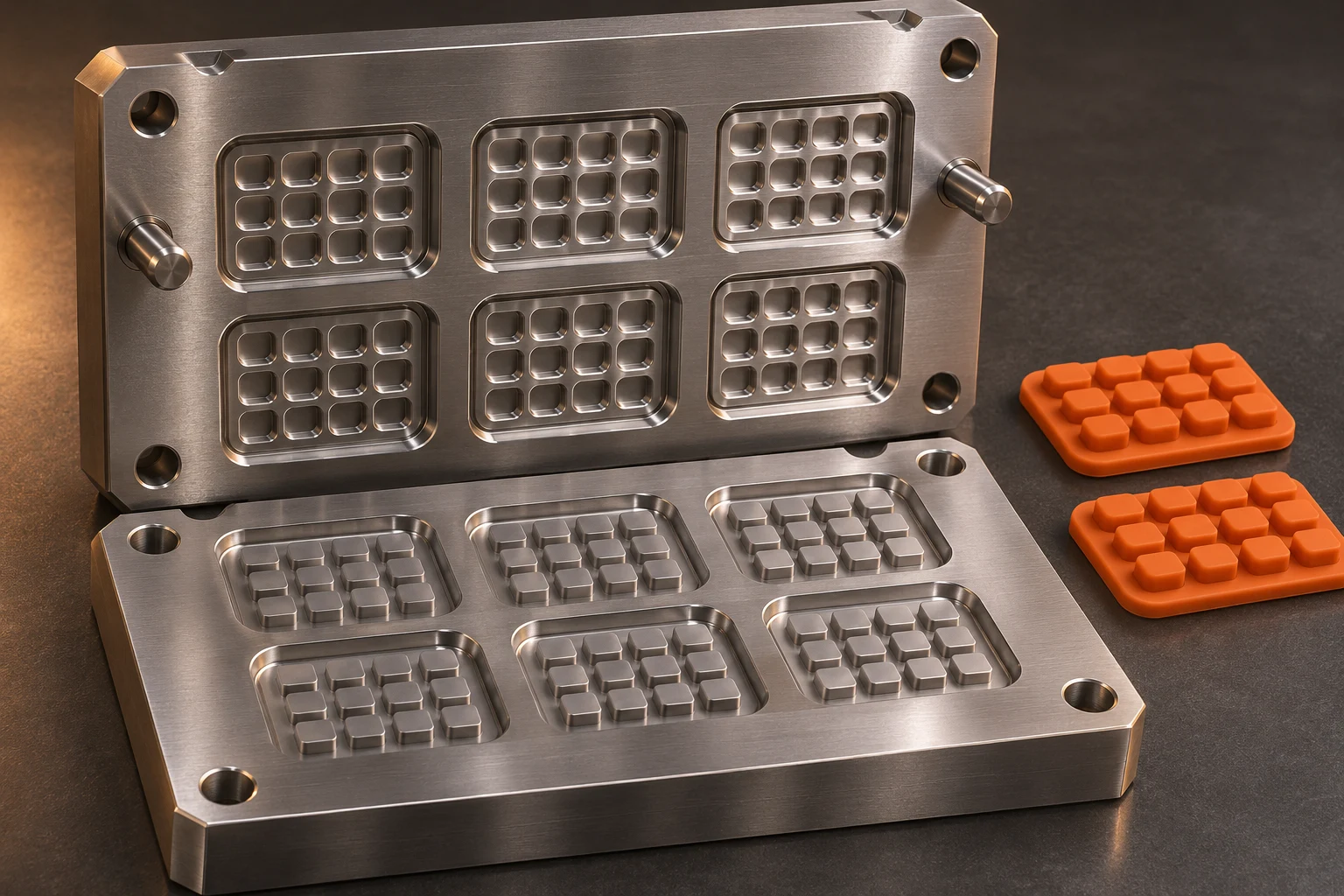
Conventional solid-silicone compression tooling receives a prepared charge in the open mold. LSR injection tooling is part of a liquid-material injection system. A price comparison is meaningful only when the material, part, machine and production scope are defined.
Material and process are different decisions
HCR describes a high-consistency silicone material family; it is not another name for a compression press. LSR describes liquid silicone rubber. WACKER lists compression molding among solid-silicone processing routes and injection molding among routes for both solid and liquid silicones. Treat the exact grade and processing route as explicit specification items.
Avoid choosing a route from the word “silicone” alone. Use the application, geometry, production plan and available equipment to frame the engineering discussion.
Compare the manufacturing system
| Question | Solid-silicone compression route | LSR injection route |
|---|---|---|
| Material introduction | Prepared charge placed in an open mold | Metered liquid system feeds the injection process |
| Tooling discussion | Parting, cavity layout, charge handling and release | Injection interface, feed system, cavity design and release |
| Equipment review | Press installation and operating requirements | Molding machine plus material-delivery compatibility |
| Commercial comparison | Mold, labor, trials and part finishing | Mold, feeding arrangement, automation and trials |
This table describes discussion topics, not universal equipment specifications. Special processes and individual material formulations need their own review.
Compare proposals at the same production target
Ask both suppliers to quote the same part revision, material requirements, expected demand and inspection scope. Clarify what the unit price includes: manual loading, trimming, inserts, packing and inspection can make two apparently similar prices very different.
Do not apply a fixed multiplier between the tooling prices. The number of cavities, part complexity and proposed automation may differ. A supplier should explain the architecture behind its proposal rather than only naming the process.
Make a documented route decision
Write down which requirement drives the choice: a known press, a specified material, labor availability, an appearance target or a planned production rate. Ask how each route will validate that requirement during trial.
For a compression-tooling inquiry, identify any future automation plans early. For an LSR inquiry, request an equipment-interface review instead of assuming that a mold made for one machine will install on another. This website focuses on solid-silicone compression steel molds; comparisons here are educational and do not imply that every process is offered.
Common questions
Is HCR the same as HTV?
These terms describe overlapping material or curing classifications in industry usage, but they do not fully specify the processing route. State the exact grade and molding method.
Can I compare only the tooling quotation?
Compare the whole production scope as well. Material preparation, handling, trimming, inspection and equipment requirements affect the commercial decision.
Basis & further reading
WACKER: Solid and Liquid Silicone Rubber — Material and Processing Guidelines. Material-family and shrinkage principles are summarized above. The procurement checklist and suggested review questions are editorial guidance, not a WACKER quotation or a validated process recipe.
Prepared for this website review on 18 November 2026. Project-specific technical review is required before manufacturing.
Turn the questions into a project brief.
Capture your material, drawings and tooling requirements in one place.
Prepare your brief